
Accelerating Reactive Flow Simulations with Deep Operator Networks (MS Thesis)
Objective of This Work
- Reactive flow simulations are limited by the high computational cost of chemistry integration.
- Developed a machine learning–based surrogate framework to accelerate this step in PeleLMeX, an open-source, high-fidelity CFD solver for reactive flows.
- Implemented a Deep Operator Network (DeepONet) to learn the temporal evolution of reduced thermochemical states, bypassing conventional numerical integration.
- Established a C–Python interface enabling seamless integration of the trained model with PeleLMeX.
- Validated the framework on a 2D reacting flow case, demonstrating strong accuracy and significant computational savings.
Background: Reaction Integration in PeleLMeX
- PeleLMeX is an open-source, high-fidelity CFD solver for low-Mach reactive flow simulations, built on the AMReX framework.
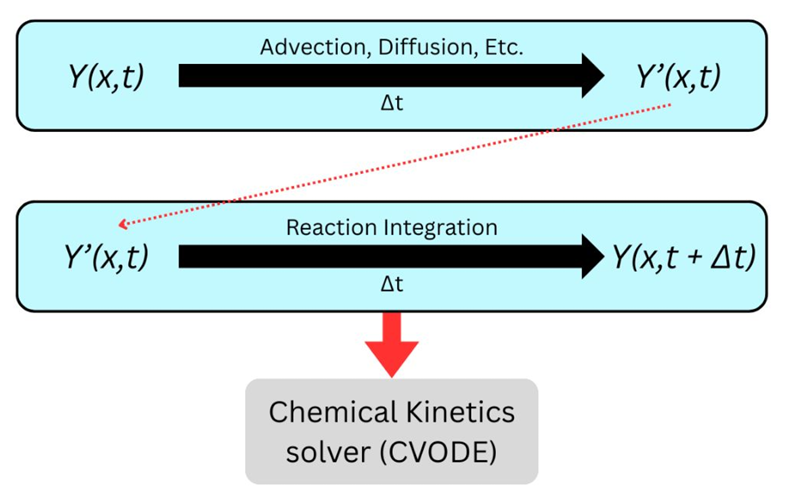
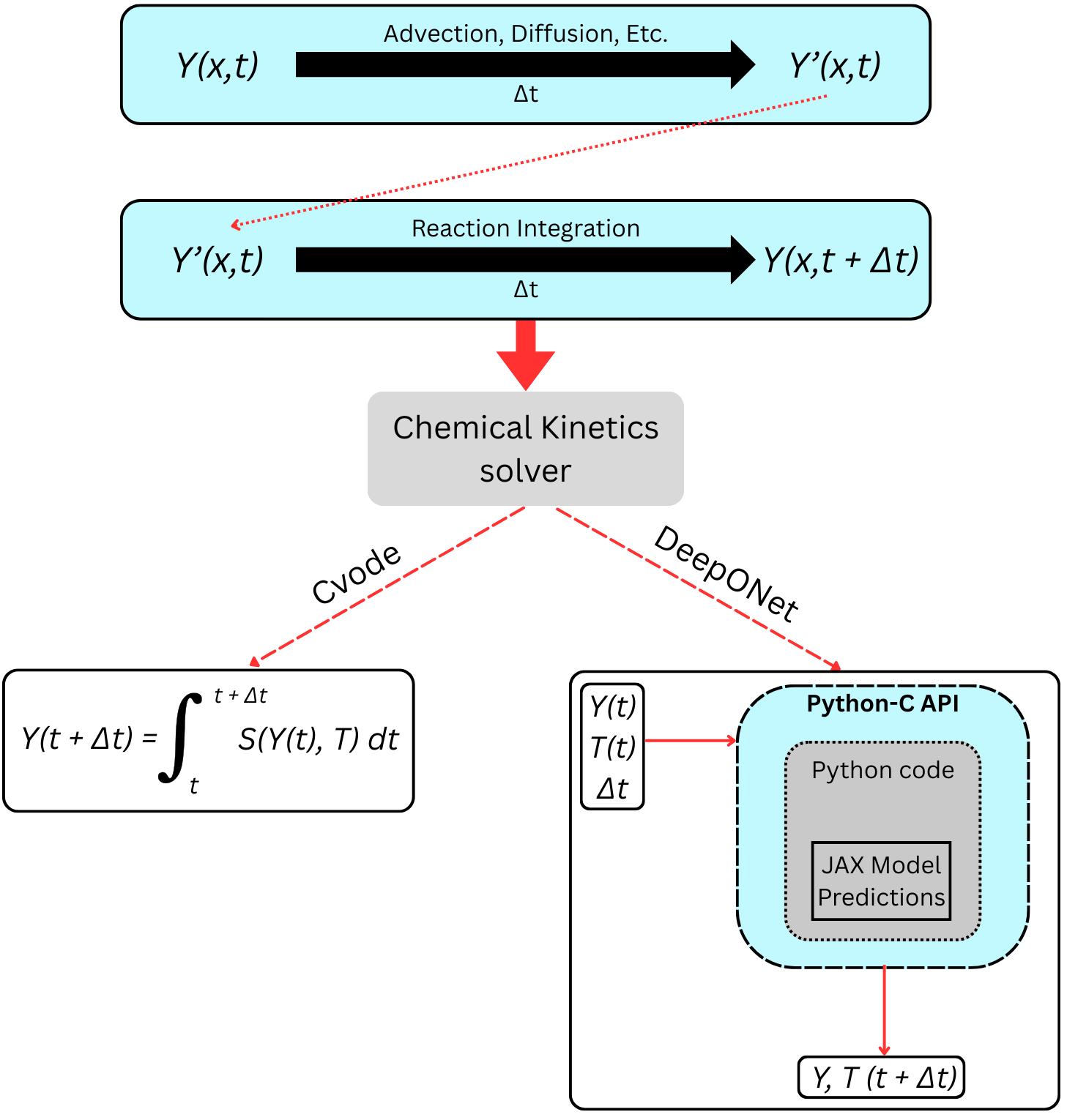
- The solver employs an operator-splitting approach, separating transport (advection + diffusion) from reaction during each time advance.
- In the reaction step, every grid cell solves a system of stiff, nonlinear ODEs representing detailed chemical kinetics.
- These ODEs are integrated using SUNDIALS CVODE, an implicit solver designed for stiff reaction systems.
- Although robust, this step dominates computational cost—typically over 70% of total runtime, especially for detailed fuel mechanisms.
- Each cell evolves independently, enabling parallel execution but resulting in high cumulative computational overhead.
- This motivates the development of a faster surrogate capable of predicting the temporal evolution of thermochemical states directly, without iterative ODE integration.
Deep Operator Network (DeepONets) Framework
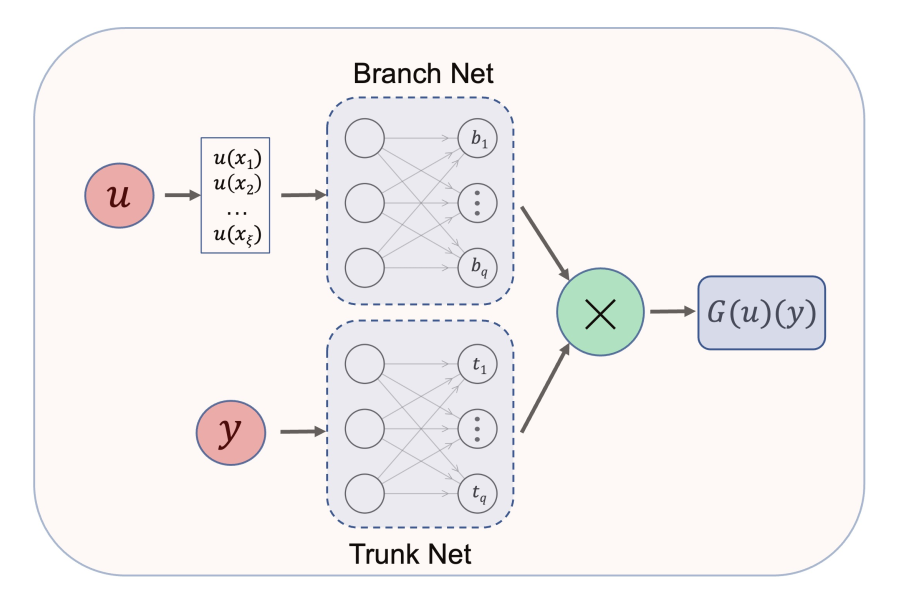
- Deep Operator Networks (DeepONets) are neural architectures that learn mappings between functions, making them suitable for modeling complex dynamical systems.
- Instead of predicting fixed scalar outputs, DeepONets learn the temporal evolution of entire thermochemical states over time.
- The architecture consists of two subnetworks: the Branch Net, which processes the thermochemical input state, and the Trunk Net, which takes the time increment as input.
- The outputs of both networks are combined through a dot product to predict the future thermochemical state.
- This approach allows DeepONets to generalize across a wide range of initial conditions and reaction timescales.
- In this work, DeepONets were trained to predict representative quantities such as temperature and key species mass fractions, effectively replacing traditional numerical integration of stiff ODEs.
Data Preparation and Reduction
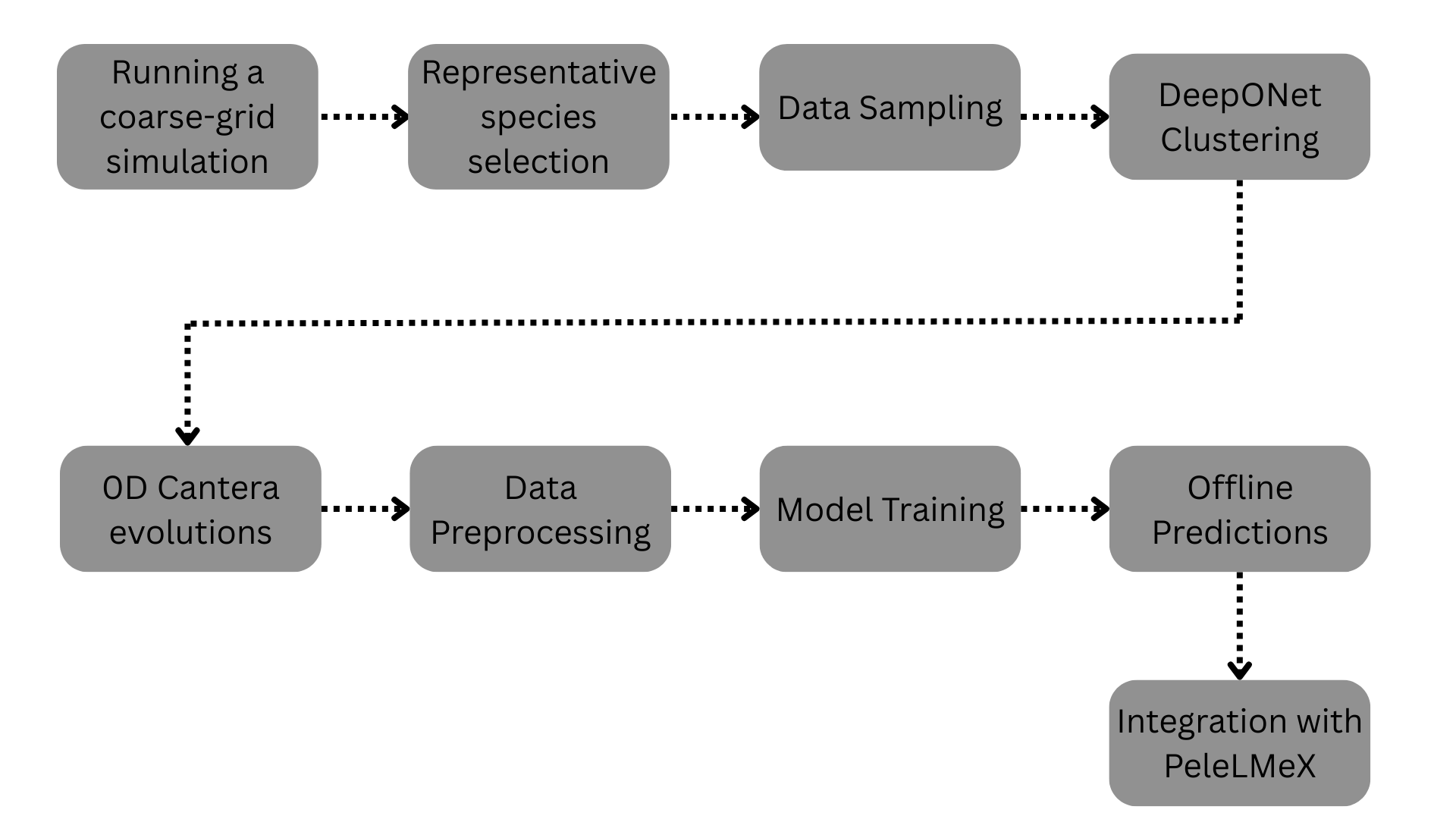
- Detailed mechanisms contain many species, so a reduced set of representative scalars (key species and temperature) was selected to lower computational cost.
- Representative species were chosen based on their influence on thermal and chemical dynamics, retaining only those that contribute most to system variability.
- This reduction enables faster network training and inference while still capturing the essential evolution of temperature and major species.
- The DeepONet predicts only the representative scalars, keeping the model size and complexity manageable.
- A separate neural network called reconstruction network (RecNet) maps the representative scalars back to the remaining species, enabling full thermochemical state recovery without increasing DeepONet complexity.
Integration into PeleLMeX
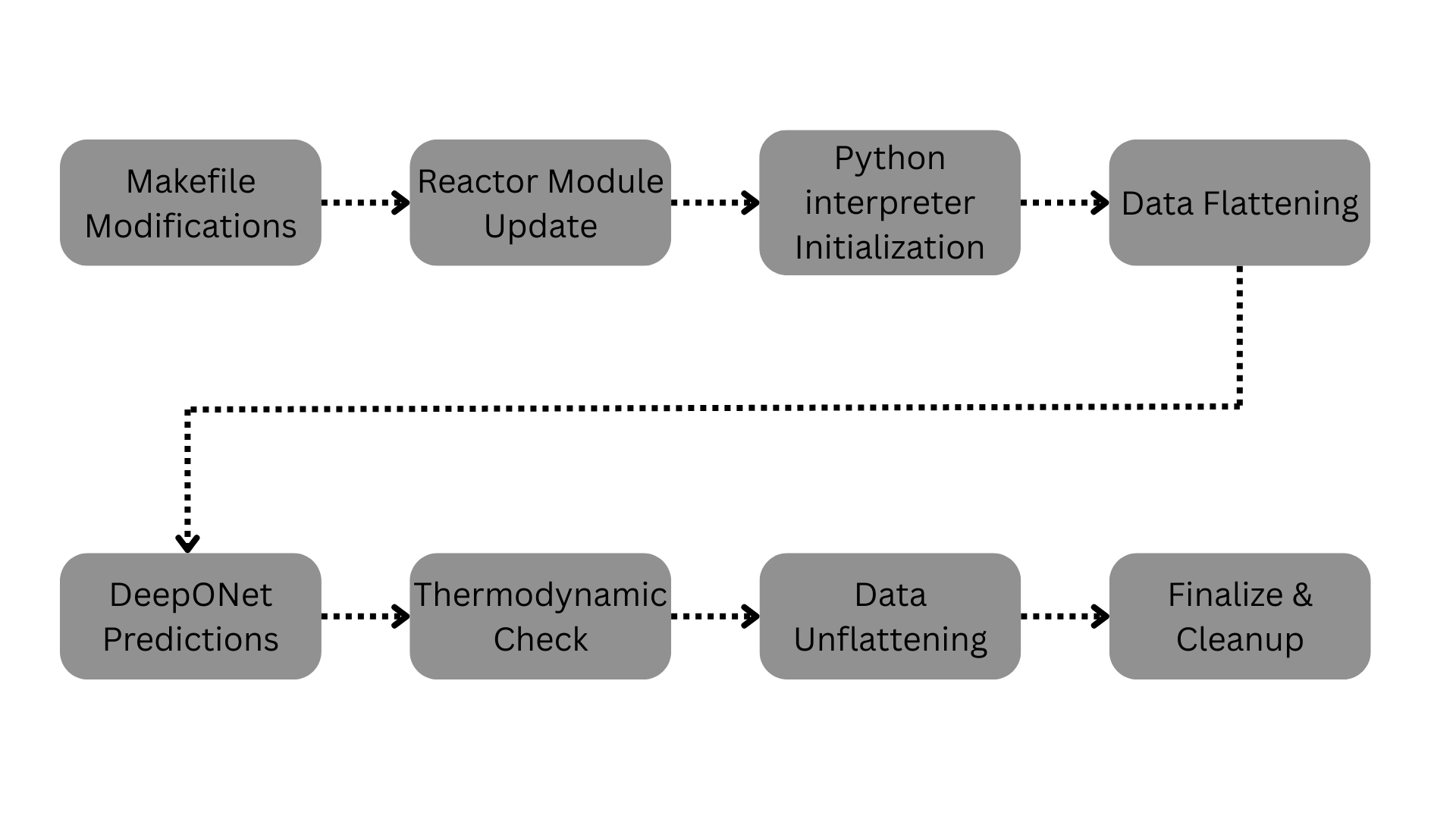
- The pretrained DeepONet model was coupled with the PeleLMeX solver through a custom C–Python interface implemented using Python.h and the NumPy C API.
- During the reaction step of the operator-splitting loop, each cell’s thermochemical state is flattened and passed to the DeepONet for inference.
- The DeepONet predicts the updated representative scalars for the specified time increment, replacing the conventional stiff ODE integration.
- The predicted outputs are mapped back to the full thermochemical state using the reconstruction network (RecNet).
- The updated species and temperature fields are then returned to the solver and used to advance transport and subsequent chemistry evaluations.
Model Training
- The training data was generated using a 2D backward-facing step methane-air flame simulated with the DRM19 mechanism, providing diverse reacting-flow conditions.
- A coarse-grid simulation was used to collect temporal snapshots of temperature and species fields, from which representative species were selected based on a cutoff mass-fraction threshold.
- PCA was applied to the sampled snapshots to select diverse thermochemical states for training while reducing redundancy in the dataset.
- Each sampled state was evolved through 0D constant-pressure reactors in Cantera to obtain time-series data for temperature and species evolution.
- The DeepONet and RecNet models were built in JAX and trained on an NVIDIA RTX A6000 GPU using a two-stage process: pre-training followed by refined auto-regressive training.
- Pre-training minimized short-step prediction error for physical consistency, while refined training increased rollout length by feeding the model’s own predictions back as inputs.
Results
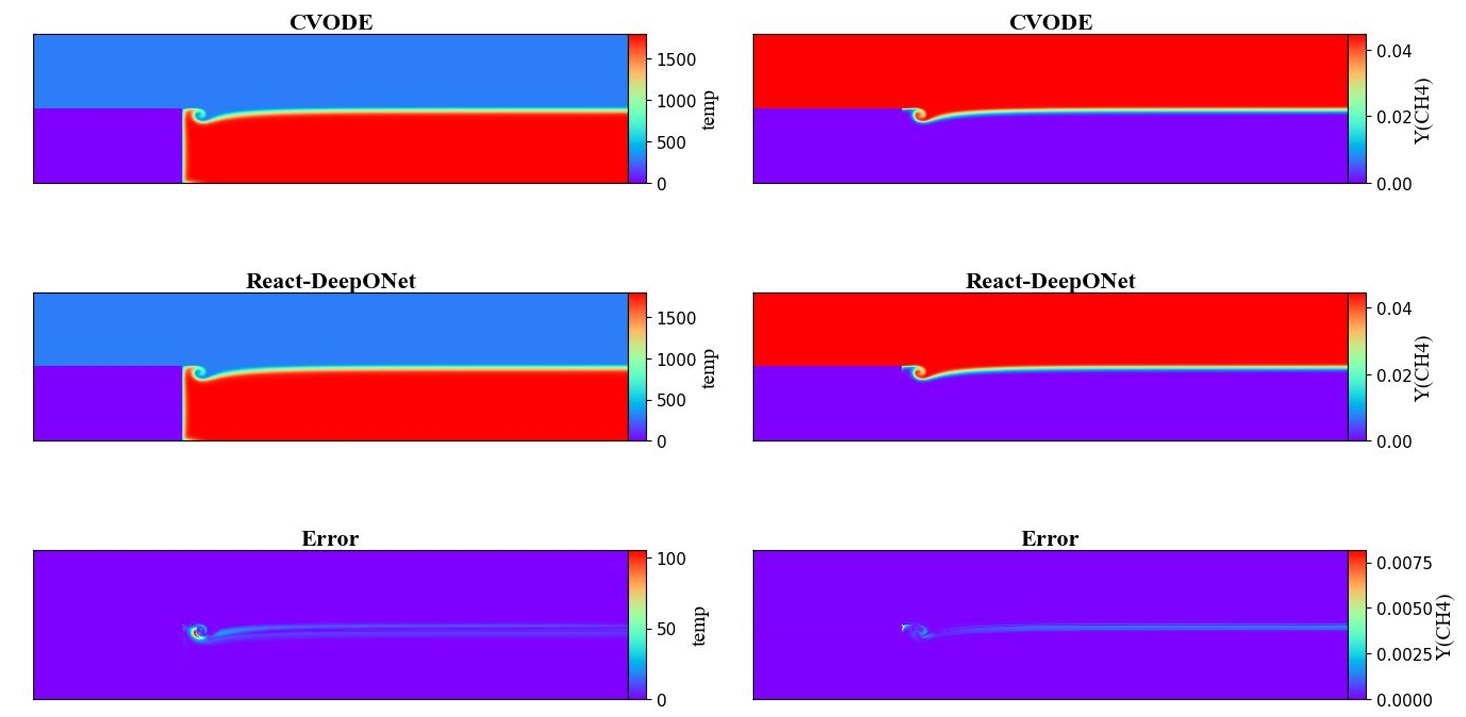
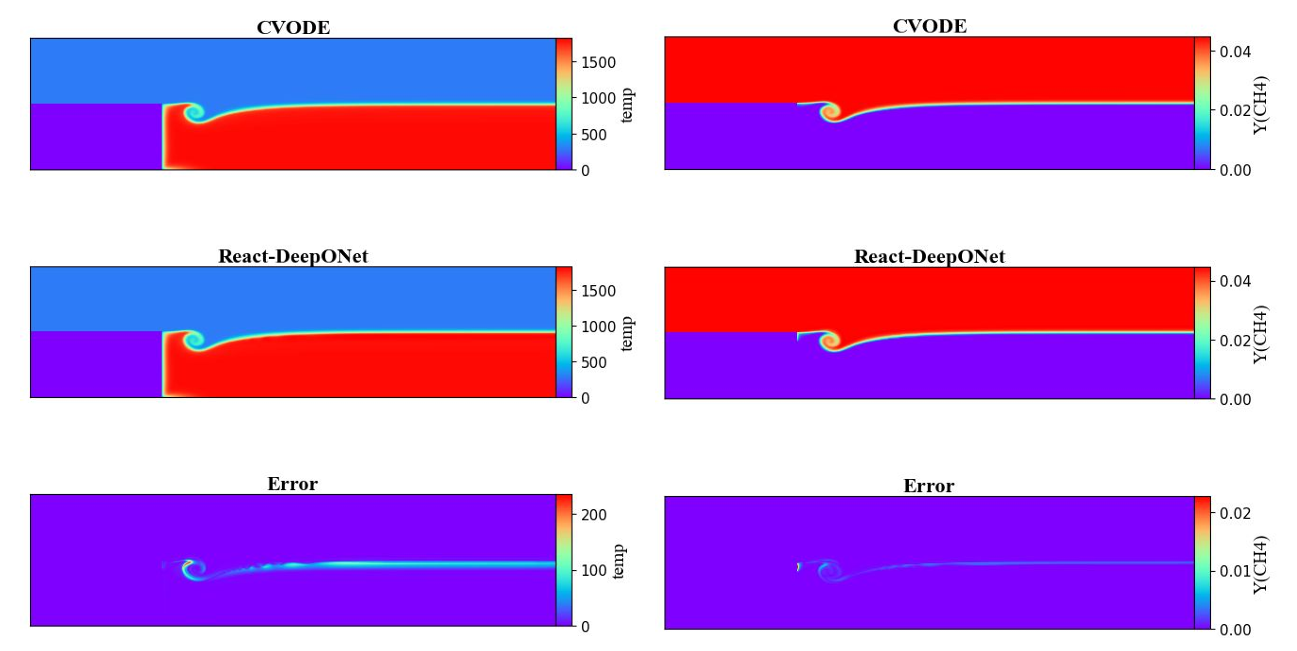
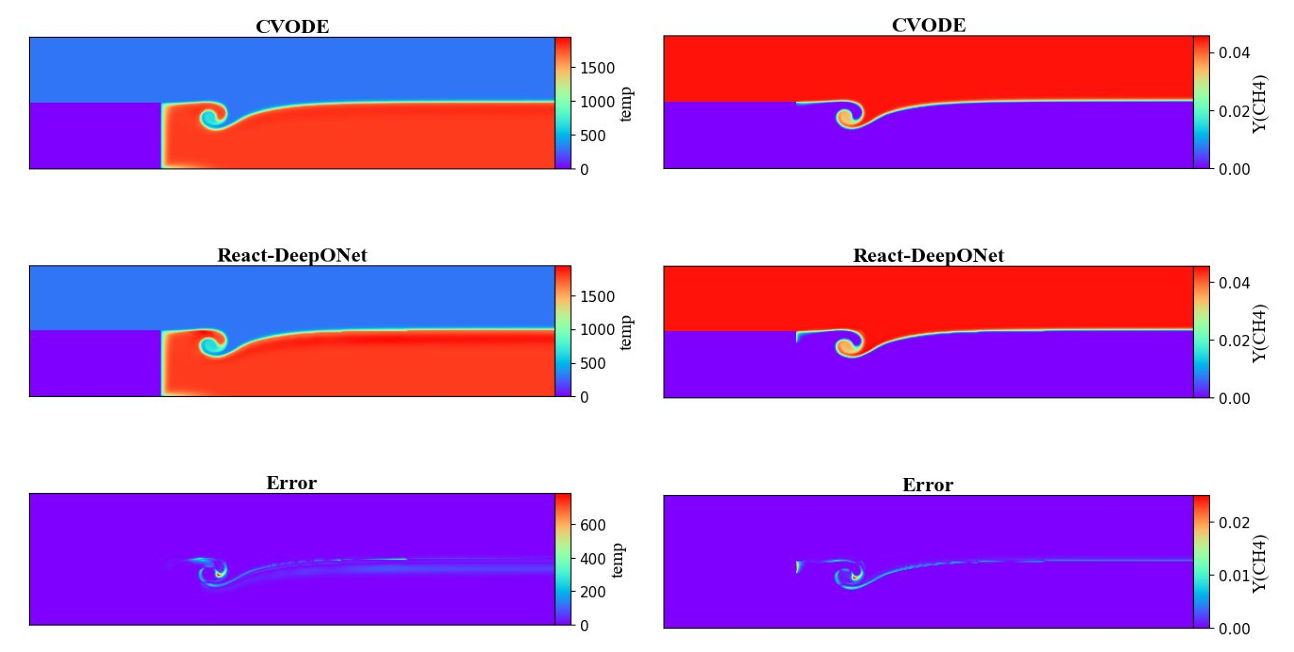
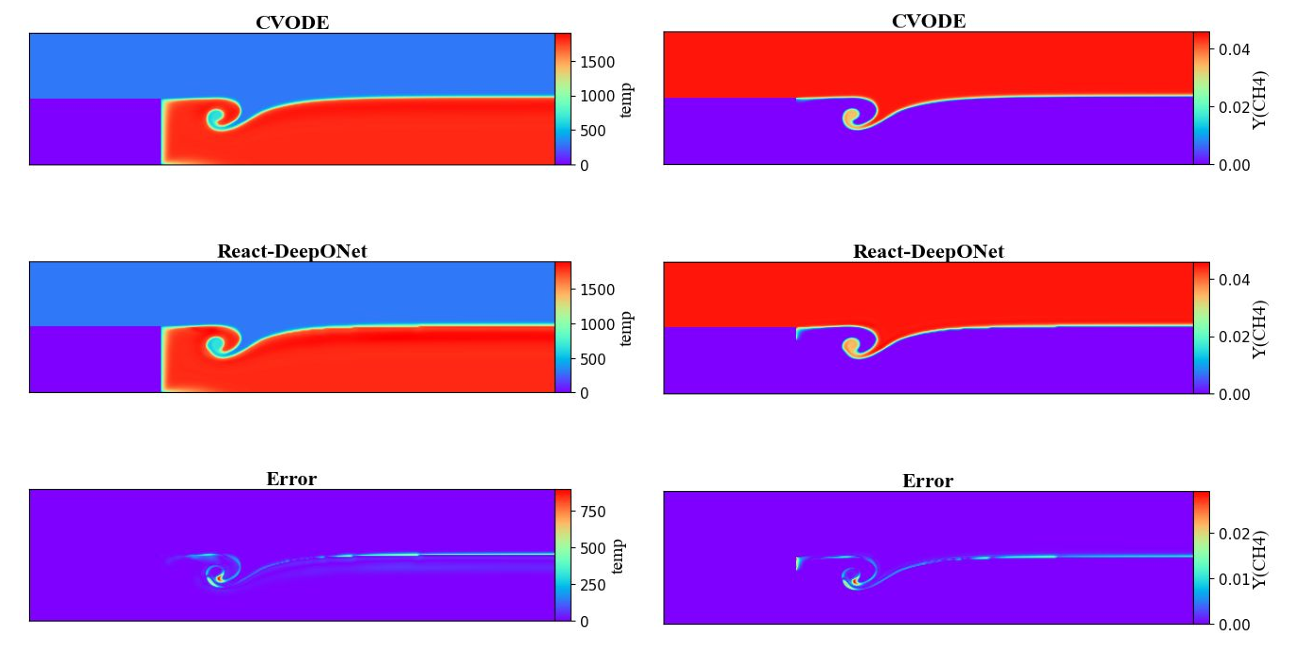
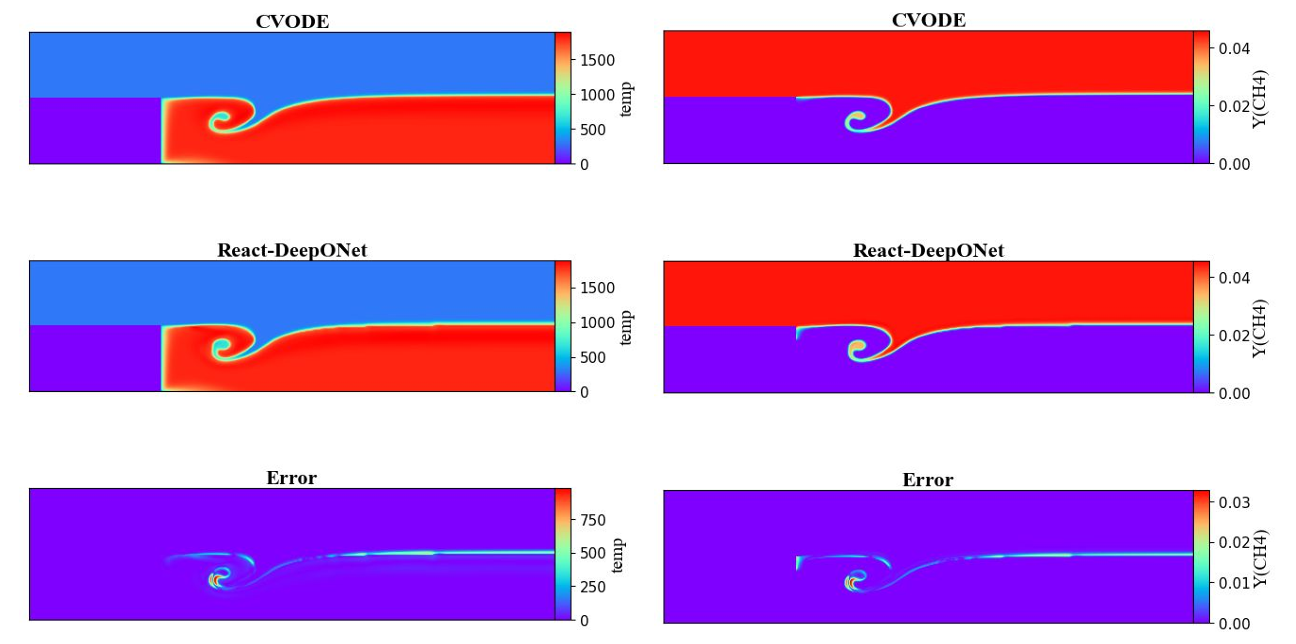
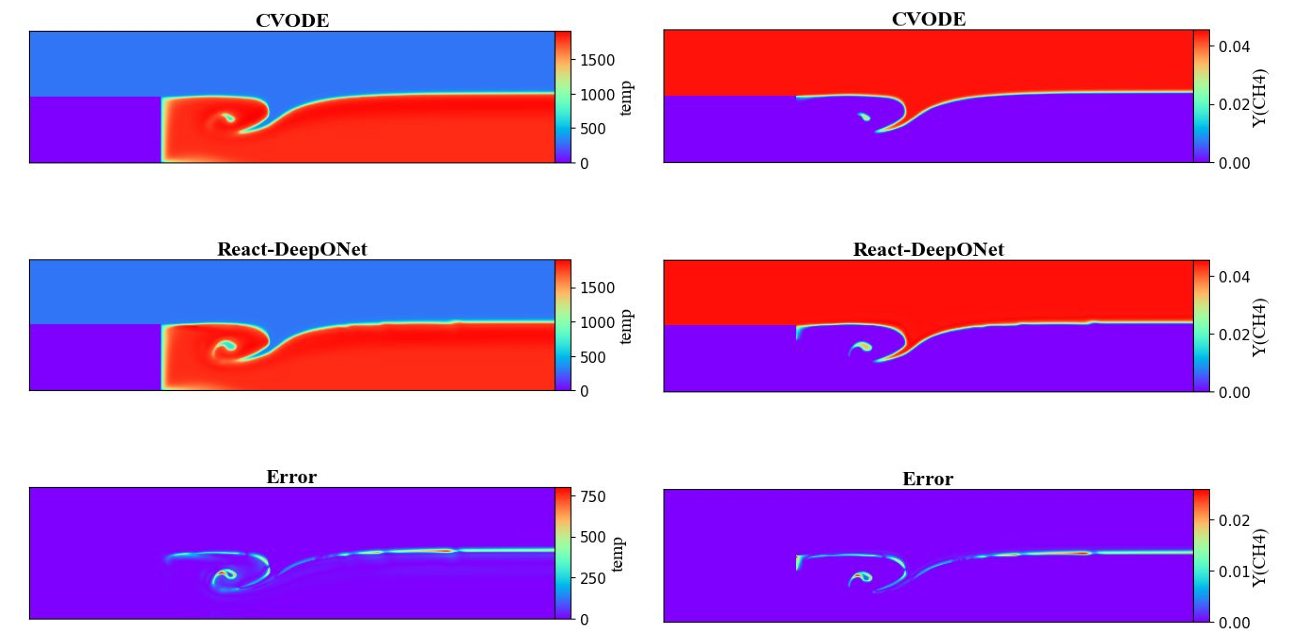
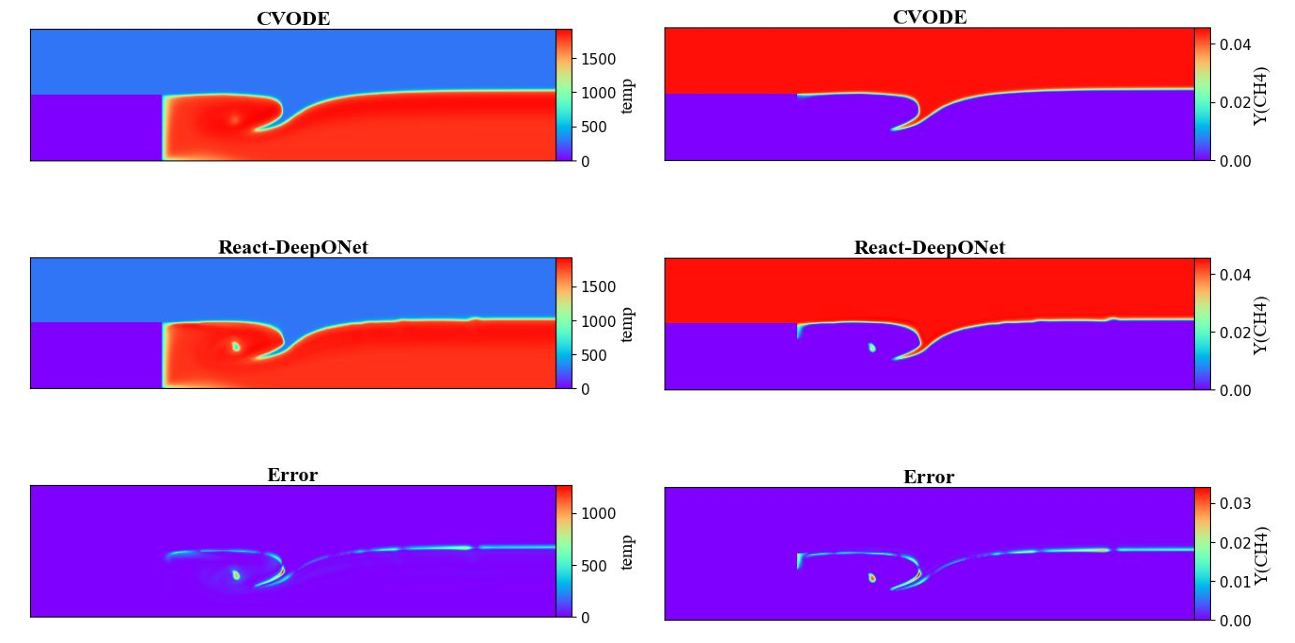
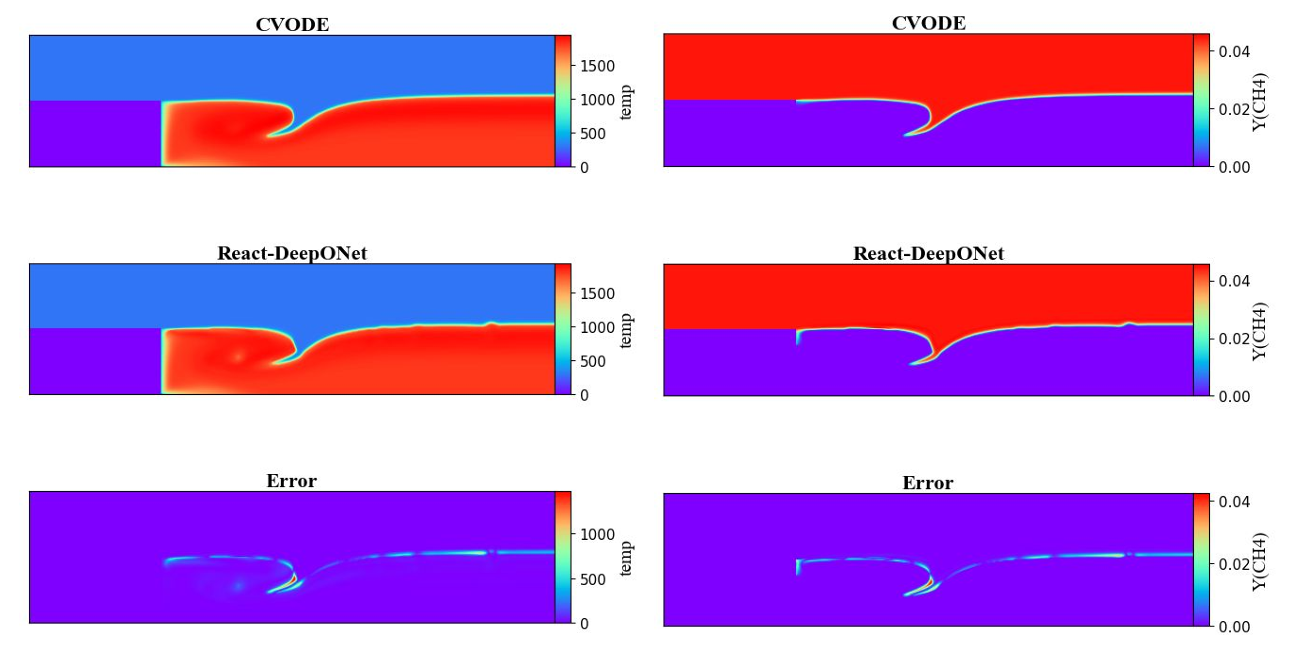
- The DeepONet-based surrogate was integrated into PeleLMeX and tested on the 2D backward-facing step flame up to 3 ms using a refined AMR grid.
- Predicted temperature and key species fields closely matched the solver’s native chemistry integration, with low absolute error across all time snapshots.
- Error contours confirmed that the surrogate preserved major flame structures while significantly reducing the overall cost of the reaction step.
Conclusion
- A DeepONet-based surrogate was developed to accelerate chemistry integration in reactive CFD while maintaining physical accuracy.
- The pretrained DeepONet and RecNet models were successfully integrated into PeleLMeX through a Python–C++ interface.
- The surrogate accurately predicted representative species and temperature, with the RecNet restoring the full thermochemical state.
- Validation on a backward-facing step methane–air flame showed strong agreement with the CVODE-based baseline across all time snapshots.
- Using the DRM19 mechanism, the framework achieved an overall ~11% reduction in simulation runtime by lowering chemistry integration cost.
- Larger speedups are expected when applying the method to more complex fuel mechanisms and larger domains.
For more details on the methodology, integration workflow, and full set of results, please refer to the complete thesis document:
View Full MS Thesis